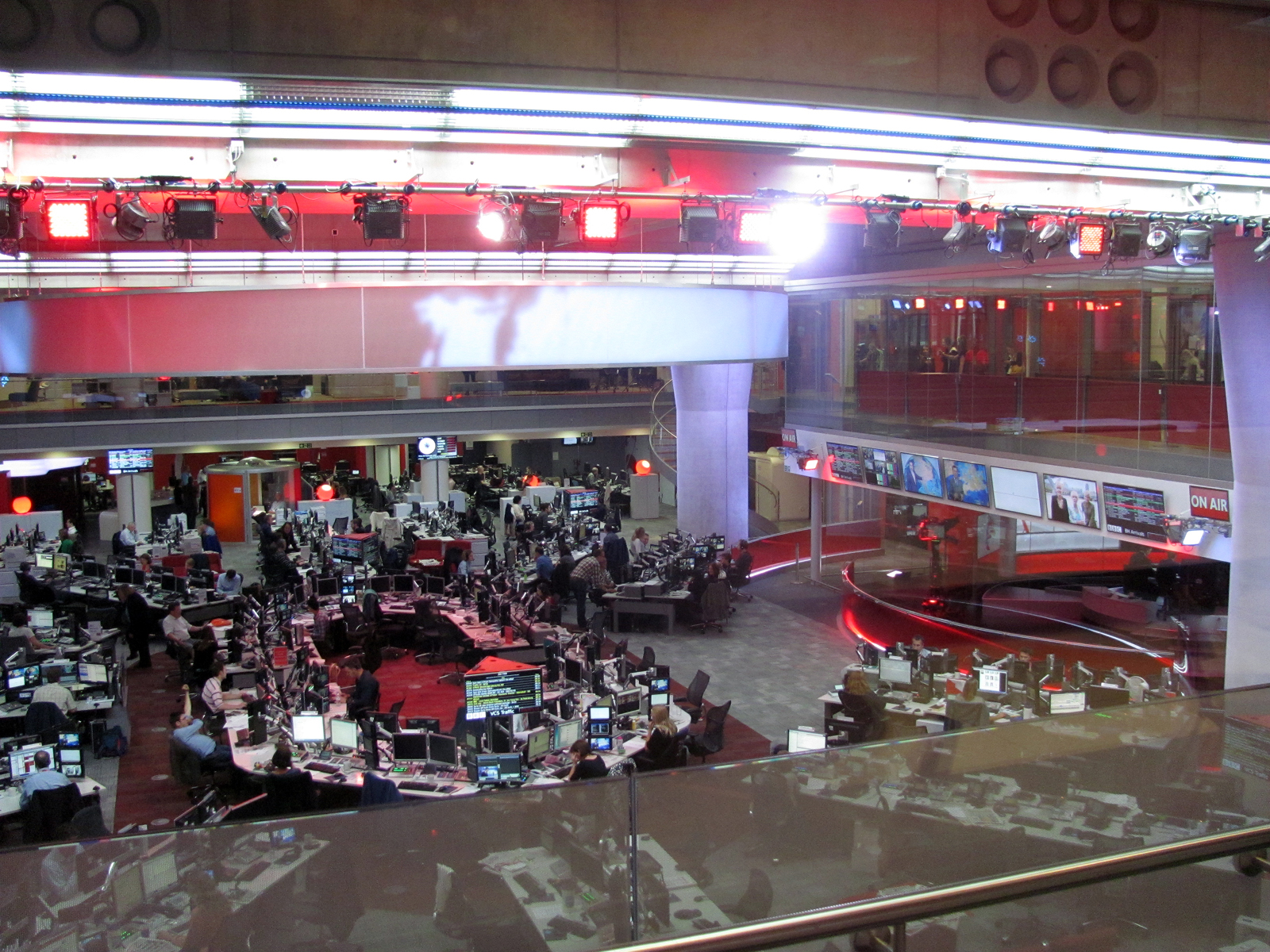
Photo by Michal Bělka via wikimedia (BY-SA)
Introduction
In the dynamic landscape of news and information, headlines and article conclusions serve distinct, yet equally crucial, functions. While both are integral to conveying an article's message, their purpose, structure, and impact on the reader are fundamentally different. A headline acts as the initial hook, a concise summary designed to grab attention and inform the reader about the core subject matter, often hinting at the article's central conflict or revelation. It's the storefront window, enticing potential readers to step inside. Conversely, an article's conclusion provides a sense of closure, synthesizing the presented information, reinforcing key arguments, and often offering a final thought, call to action, or broader implication. It’s the final impression, the lingering thought a reader carries away. Understanding these differences is not merely an academic exercise; for both content creators and consumers, it is essential for effective communication and critical interpretation of information in our rapidly evolving media environment. This article is for anyone who consumes or creates news content, from casual readers seeking to better understand journalistic practices to aspiring writers aiming to hone their craft.
Key Takeaways
- Headlines are attention-grabbers and summaries: They aim to entice readers and convey the article's core topic quickly.
- Conclusions offer synthesis and closure: They summarize main points, reinforce arguments, and provide a final perspective or implication.
- Purpose dictates structure: Headlines are brief, impactful, and often declarative, while conclusions are more expansive, analytical, and reflective.
- Reader engagement differs: Headlines are about the initial decision to read, conclusions are about the lasting impression and understanding.
- Avoiding misdirection is key: Both should accurately represent the article's content, preventing "clickbait" headlines or misleading conclusions.
Background/Context
The evolution of news consumption, particularly with the advent of digital platforms, has amplified the significance of both headlines and conclusions. In an era of information overload, where readers scroll through countless articles, the headline has become more critical than ever in determining whether an article gets read at all. This pressure has, at times, led to the prevalence of "clickbait" – headlines designed primarily for engagement rather than accurate representation. Fact-checking organizations, such as the International Fact-Checking Network (IFCN) at Poynter (https://www.poynter.org/ifcn/) and Reuters Fact Check (https://www.reuters.com/fact-check/), frequently address instances where headlines misrepresent the underlying content, underscoring the ethical responsibility of headline writing.
Simultaneously, the conclusion’s role has become crucial for solidifying understanding and combating misinformation. As readers often skim or jump between sections, a well-crafted conclusion can serve as a vital anchor, ensuring the main message is conveyed even if the entire article isn't meticulously absorbed. The Pew Research Center's ongoing work on journalism (https://www.pewresearch.org/journalism/) consistently highlights shifts in news consumption patterns, emphasizing the need for journalists to adapt their writing strategies to maintain clarity and impact from start to finish. The Associated Press (AP) Fact Check (https://apnews.com/hub/ap-fact-check) also frequently analyzes how information is framed and concluded, particularly in complex political or scientific topics, reinforcing the need for clear and unbiased summarization.
Historically, headlines were more straightforward, often merely stating the subject. As newspapers competed for readership, they evolved to be more provocative. Conclusions, too, have transformed from simple summaries to more sophisticated analyses, reflecting the increased demand for context and interpretation in modern journalism. Today, both elements are carefully crafted to optimize reader engagement and comprehension, balancing the need for brevity with the imperative for accuracy and depth.
Practical Explanation with Examples
To truly grasp the distinction, let's break down the practical application of headlines versus conclusions.
Headlines: The Gateway to Information
A headline's primary objective is to inform and entice. It must be concise, accurate, and compelling. Think of it as an elevator pitch for the entire article.
Purpose:
- Grab attention: In a crowded news feed, it needs to stand out.
- Summarize the core topic: Quickly tell the reader what the article is about.
- Set expectations: Hint at the angle or key takeaway without revealing everything.
- Inform search engines: Good headlines contain keywords relevant to the article's content.
Characteristics:
- Brevity: Typically under 70 characters for optimal display on search engines and social media.
- Action-oriented: Often uses strong verbs to convey activity or impact.
- Specific but not overly detailed: Provides enough information to pique interest without getting bogged down.
- Often declarative or interrogative: States a fact or poses a question.
Examples:
Headline: "New Study Links AI to Job Displacement in Manufacturing"
- Why it works: It's specific ("AI," "Job Displacement," "Manufacturing"), highlights a key finding ("New Study Links"), and is concise. It tells you the article will be about AI's impact on jobs in a specific sector.
Headline: "Global Leaders Convene for Climate Summit Amid Rising Temperatures"
- Why it works: Identifies key actors ("Global Leaders"), event ("Climate Summit"), and context ("Rising Temperatures"), creating urgency and relevance.
Headline: "Local Council Debates Controversial Rezoning Proposal"
- Why it works: Pinpoints location ("Local Council"), action ("Debates"), and subject ("Controversial Rezoning Proposal"), indicating a local news story with potential conflict.
Article Conclusions: The Anchor and the Apex
A conclusion, by contrast, is the final word. It's where all the disparate pieces of information presented in the article come together to form a cohesive, lasting impression.
Purpose:
- Summarize main arguments: Reiterate the most important points without simply repeating them verbatim.
- Provide synthesis: Show how different facts and findings connect to support the overall narrative.
- Offer final insights or implications: Discuss the broader significance, future outlook, or potential consequences.
- Reinforce the article's thesis: Leave the reader with a clear understanding of the central message.
- Call to action (optional): In some types of articles (e.g., opinion pieces, guides), it might suggest next steps.
Characteristics:
- More expansive than the headline: Allows for greater detail and nuance.
- Analytical and reflective: Often involves interpreting the presented facts.
- Forward-looking or conclusive: Provides a sense of finality or points towards future developments.
- Avoids introducing new information: All data should have been presented earlier.
Examples (following the headlines above):
Conclusion for "New Study Links AI to Job Displacement in Manufacturing":
- "The findings of the recent study underscore a critical juncture for the manufacturing sector. While AI promises efficiency gains, its potential to automate tasks traditionally performed by humans necessitates proactive policy development and robust retraining initiatives. As technology continues its rapid advancement, the challenge for governments and industries alike will be to harness AI's benefits while mitigating its disruptive impact on the workforce, ensuring a just transition for affected laborers and fostering innovation responsibly."
- Why it works: It summarizes the core conflict (AI benefits vs. job disruption), offers implications (policy, retraining), and provides a forward-looking perspective on responsible innovation.
Conclusion for "Global Leaders Convene for Climate Summit Amid Rising Temperatures":
- "Ultimately, the success of the climate summit will not be measured solely by the agreements signed, but by the tangible actions that follow. With scientific consensus on rising global temperatures firmer than ever, the urgency for coordinated international efforts to reduce emissions and adapt to climate change has reached a critical point. The rhetoric of ambition must now translate into concrete policies and investments, as the window for meaningful intervention continues to narrow, demanding unprecedented global cooperation for the planet's future."
- Why it works: It synthesizes the summit's purpose with the broader climate crisis, emphasizes urgency and the need for action, and offers a strong final statement on global cooperation.
Conclusion for "Local Council Debates Controversial Rezoning Proposal":
- "The protracted debate over the rezoning proposal highlights the complex balance local authorities must strike between urban development and community preservation. Regardless of the council's final vote, the discussions have brought to light deep-seated concerns among residents about infrastructure strain, property values, and the changing character of their neighborhood. Moving forward, transparent communication and inclusive public engagement will be paramount for any future development plans to gain community trust and ensure sustainable growth."
- Why it works: It summarizes the tension (development vs. preservation), reflects on the public's concerns, and offers a broader recommendation for future governance.
Key Differences in a Table Format:
| Feature | Headline | Article Conclusion |
|---|---|---|
| Primary Goal | Attract attention, inform core topic | Synthesize, provide closure, offer final insight |
| Length | Very short, concise | Longer, more expansive |
| Position | Beginning of article | End of article |
| Content Focus | Main event, key actors, immediate impact | Broader implications, analysis, future outlook |
| Tone | Direct, often urgent/intriguing | Reflective, analytical, often summarizing |
| Information | Introduces new topic | Reinforces and contextualizes presented info |
| Example | "New Drug Shows Promise Against Disease" | "...While promising, further trials are needed to determine long-term efficacy and safety, marking a cautious but hopeful step forward in medical research." |

Photo by luc legay via flickr (BY-SA)
Common Mistakes or Risks
Understanding the differences between headlines and conclusions also means recognizing the pitfalls that can arise when these distinctions are blurred or ignored.
"Clickbait" Headlines: This is perhaps the most prevalent risk in the digital age. A headline designed purely for clicks, often by exaggerating, sensationalizing, or outright misrepresenting the article's content, erodes trust. While it might generate initial traffic, it leads to reader frustration and damages credibility. Fact-checking initiatives by organizations like Poynter's IFCN (https://www.poynter.org/ifcn/) and AP Fact Check (https://apnews.com/hub/ap-fact-check) frequently call out such practices. For example, a headline stating "Miracle Cure Discovered for Cancer!" when the article discusses a preliminary animal study on a potential therapy is a severe form of clickbait.
Vague or Generic Headlines: On the other end of the spectrum, a headline that is too broad or uninformative fails to capture attention or convey the article's essence. "Important News About the Economy" tells the reader nothing specific and provides no incentive to read further.
Introducing New Information in the Conclusion: A conclusion's role is to summarize and synthesize what has already been presented. Dropping a crucial new piece of evidence, an unmentioned statistic, or a new argument in the final paragraph is poor practice. It leaves the reader feeling cheated or confused, as they haven't had the opportunity to process this information within the article's main body.
Repetitive Conclusions: While summarizing is key, a conclusion that merely repeats sentences or phrases from earlier paragraphs without adding new insight or synthesis is weak. It demonstrates a lack of analytical depth and fails to provide a satisfying sense of closure.
Misleading Conclusions: Just as headlines can mislead, conclusions can also subtly distort the overall message, perhaps by overemphasizing a minor point, downplaying significant caveats, or presenting a definitive stance where the evidence was more ambiguous. This is particularly problematic in sensitive topics, where neutrality and accurate representation are paramount, as emphasized by Reuters Fact Check (https://www.reuters.com/fact-check/) in its guidelines for journalistic integrity.
Lack of Connection Between Headline and Conclusion: The article's journey from headline to conclusion should be coherent. If the headline promises a deep dive into a specific conflict, but the conclusion pivots to an entirely different, unrelated topic, the reader's expectation is unmet. This disconnect creates confusion and undermines the article's effectiveness.
To mitigate these risks, writers should consistently ask themselves: "Does my headline accurately reflect the core message of the article?" and "Does my conclusion effectively summarize, synthesize, and provide closure without introducing new information or misleading the reader?" This self-assessment is crucial for maintaining journalistic integrity and fostering reader trust.
## FAQ
1. What is the fundamental difference between a headline and an article conclusion?
The fundamental difference lies in their purpose and placement. A headline is the initial hook, designed to grab attention and quickly inform the reader about the article's core subject before they read it. It's concise and often provocative. A conclusion, conversely, is the final section of an article, serving to summarize the main points, synthesize the information presented, and provide a sense of closure or final insight. It's more expansive and reflective.
2. Why is it important for readers to understand these differences?
For readers, understanding these differences is crucial for critical media consumption. It helps them differentiate between an initial attention-grabbing summary (the headline) and the comprehensive understanding provided by the full article, especially its conclusion. This awareness helps readers identify potential "clickbait" headlines that misrepresent content and ensures they fully grasp the nuanced takeaways and implications presented in the conclusion, rather than forming opinions based solely on introductory statements.
3. What role does accuracy play in both headlines and conclusions?
Accuracy is paramount in both. A headline must accurately reflect the content of the article to avoid misleading readers, a practice frequently highlighted by fact-checking organizations like the IFCN (https://www.poynter.org/ifcn/). Similarly, a conclusion must accurately summarize the evidence and arguments presented within the article, without introducing new information or distorting the overall message. Inaccurate headlines can lead to misinformation, while inaccurate conclusions can leave readers with a flawed understanding of the topic.
4. Can a headline ever be the same as a conclusion?
No, a headline should never be the same as a conclusion. A headline is a brief, enticing introduction, while a conclusion is a comprehensive synthesis and final thought. While both might touch upon the article's main theme, their structure, length, and function are entirely different. A headline asks, "What is this about?" A conclusion answers, "What does it all mean, and what are the implications?"
5. What should writers do next after writing a headline and conclusion?
After crafting a headline and conclusion, writers should review both in conjunction with the full article. They should ensure the headline accurately previews the content and the conclusion accurately summarizes and synthesizes it. It's beneficial to ask: "If a reader only read the headline and the conclusion, would they accurately understand the article's main point and implications?" They should also check for consistency in tone and message, and ensure no new information is introduced in the conclusion, as advised by journalistic standards highlighted by organizations like the AP Fact Check (https://apnews.com/hub/ap-fact-check) and Pew Research (https://www.pewresearch.org/journalism/).
Educational Disclaimer
The information provided in this article is for general educational purposes only and should not be construed as professional advice. While efforts have been made to ensure accuracy and provide practical examples, journalistic practices and digital content strategies are continually evolving. Readers seeking specific guidance on writing or media analysis should consult relevant industry standards, academic resources, or professional experts.
References
- Poynter. (n.d.). IFCN Fact-Checking Standards. Retrieved from https://www.poynter.org/ifcn/
- Associated Press. (n.d.). AP Fact Check. Retrieved from https://apnews.com/hub/ap-fact-check
- Pew Research Center. (n.d.). Journalism & Media. Retrieved from https://www.pewresearch.org/journalism/
- Reuters. (n.d.). Reuters Fact Check. Retrieved from https://www.reuters.com/fact-check/
Referenced Sources
- IFCN Fact-Checking Standards — Poynter
- AP Fact Check — Associated Press
- Pew Research Journalism — Pew Research
- Reuters Fact Check — Reuters


