
Photo by luc legay via flickr (BY-SA)
The sheer volume and complexity of scientific information surrounding climate change can be overwhelming. From IPCC assessment reports to national climate vulnerability studies, these documents are often dense, technical, and replete with specialized terminology. For the general public, policymakers without scientific backgrounds, and even journalists on tight deadlines, extracting the core messages and understanding their implications can be a significant challenge. This is where the practice of crafting "Climate Report Summaries Without Jargon" becomes not just beneficial, but essential. It's about translating intricate scientific findings into accessible language, ensuring crucial insights reach a broader audience without losing accuracy.
Demystifying Climate Science for All
At its heart, "Climate Report Summaries Without Jargon" is the art and science of simplifying complex climate data and projections into clear, concise, and understandable narratives. It involves stripping away technical terms like "radiative forcing," "anthropogenic emissions," "ocean acidification," or "Representative Concentration Pathways (RCPs)" and replacing them with plain language explanations that convey the same meaning. Instead of discussing gigatons of CO2 equivalent, a summary might explain the impact in terms of the number of cars removed from roads or the energy consumption of cities. The goal isn't to dumb down the science, but to make it digestible, actionable, and relevant to everyday life. It's about bridging the communication gap between the scientific community and the public sphere, fostering a more informed discourse around one of humanity's most pressing issues.
This practice is critical for anyone who needs to grasp the fundamental truths of climate change without dedicating hours to deciphering scientific papers. This includes:
- The General Public: To make informed decisions as citizens, consumers, and voters.
- Policymakers and Legislators: To craft effective environmental policies and allocate resources wisely.
- Journalists and Communicators: To accurately report on climate change and prevent misinformation, aligning with journalistic best practices for clarity and accuracy (Pew Research Journalism).
- Educators: To teach climate science in an engaging and understandable manner.
- Business Leaders: To understand risks and opportunities related to climate impacts and sustainability.
- Non-governmental Organizations (NGOs) and Activists: To advocate for change based on sound scientific evidence.
For readers, the immediate next step after encountering such a summary should be a deeper engagement with the topic, perhaps by exploring the original report if motivated, or by seeking diverse perspectives from credible sources to build a comprehensive understanding. The summary serves as a gateway, not the final destination.
The Imperative of Clarity in Climate Discourse
The scientific consensus on climate change is robust, yet public understanding and policy responses often lag. Part of this disconnect stems from the language barrier inherent in scientific reporting. When reports from bodies like the Intergovernmental Panel on Climate Change (IPCC) are released, their sheer scale – often thousands of pages long – combined with highly specialized terminology, makes them largely inaccessible to non-experts. For instance, the IPCC's Assessment Reports are foundational, but their structure and language are designed for scientific peer review, not public consumption.
Consider the term "radiative forcing." To a climate scientist, it's a precise measure of the influence a factor has in altering the balance of incoming and outgoing energy in the Earth-atmosphere system. To someone without that background, it's an abstract concept. A jargon-free summary would explain it as "the warming or cooling effect of different factors on the planet." Similarly, "anthropogenic emissions" simply means "human-caused pollution."
The need for clear communication is amplified by the proliferation of misinformation and disinformation. When factual information is difficult to access or understand, it creates a vacuum that can be filled by misleading narratives. Fact-checking organizations like the IFCN (Poynter) and AP Fact Check emphasize the importance of presenting accurate information clearly to combat this. By proactively providing accessible summaries, credible organizations can ensure that the foundational understanding of climate science remains firmly rooted in evidence.
Crafting Unambiguous Climate Narratives: A Practical Guide
Creating effective jargon-free summaries requires a deliberate approach that prioritizes clarity, conciseness, and accuracy. It's not about oversimplification, but about strategic simplification.
1. Identify the Core Message: Before rewriting, understand the central findings and their significance. What are the key takeaways that absolutely must be conveyed? For example, if a report details regional sea-level rise projections, the core message might be "Coastal communities face increasing flood risks due to rising sea levels, which are accelerating."
2. Translate Technical Terms: This is the most crucial step. For every piece of jargon, find a plain-language equivalent.
Instead of: "The albedo effect is decreasing due to Arctic ice melt."
Use: "As Arctic ice melts, less sunlight is reflected back into space, causing the Earth to absorb more heat and warm faster."
Instead of: "Mitigation measures aim to reduce greenhouse gas concentrations."
Use: "Actions to reduce the amount of heat-trapping gases in the atmosphere."
3. Use Analogies and Metaphors: Relate complex concepts to familiar experiences.
- Example for Carbon Budget: Instead of "The remaining carbon budget for 1.5°C is approximately 500 GtCO2," explain it as: "We have a limited 'carbon budget' – like a spending limit – for how much more heat-trapping gas we can release before likely exceeding 1.5 degrees Celsius of warming. We've spent most of it already."
4. Focus on Impacts and Relevance: People connect better with information when they understand how it affects them, their communities, or the world around them.
- Original: "Regional climate models project increased frequency and intensity of extreme precipitation events."
- Summary: "Local areas can expect more frequent and heavier rainstorms, leading to greater risks of flooding."
5. Structure for Readability: Use clear headings, bullet points, and short paragraphs. Avoid long, convoluted sentences. The BBC News Verification Guide, while focused on general news, underscores the importance of clear, unambiguous language for public understanding (BBC News Verification Guide).
6. Quantify When Possible, Qualify When Necessary: While avoiding jargon, don't shy away from important numbers or trends. Present them simply.
- Example: "Global average temperature has risen by approximately 1.1°C above pre-industrial levels."
7. Maintain Scientific Accuracy: The simplified language must not distort the scientific meaning. If unsure, consult with a subject matter expert or refer to reputable glossaries from scientific organizations. This is where the journalistic principle of 'accuracy' becomes paramount (Poynter).
8. Provide Context: Briefly explain why the information is important. What are the implications of the findings?
Practical Checklist for Jargon-Free Summaries:
| Checkpoint | Description |
|---|
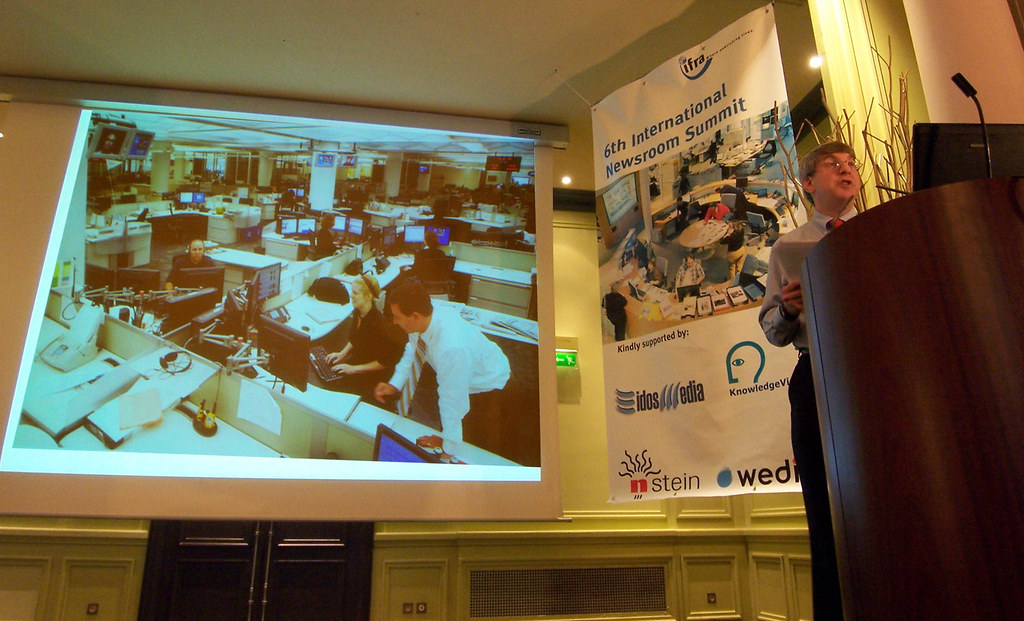
Photo by luc legay via flickr (BY-SA)
Referenced Sources
- Pew Research Journalism — Pew Research
- IFCN Fact-Checking Standards — Poynter
- AP Fact Check — Associated Press
- BBC News Verification Guide — BBC


