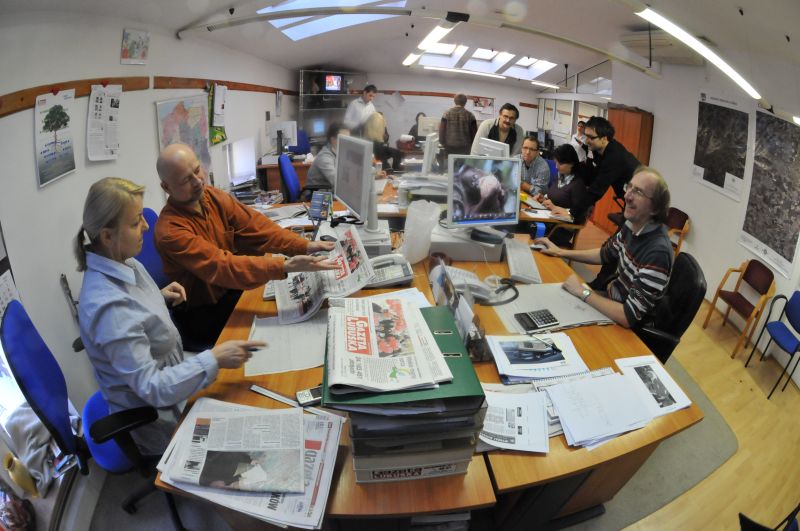
Photo by joannapoe via flickr (BY-SA)
Decoding the Business Landscape: A Contextual Guide for the Everyday Reader
In an interconnected world, business news transcends the financial pages, influencing everything from job markets and consumer prices to geopolitical stability and technological innovation. For the general reader, navigating this complex terrain can feel daunting. "Business News Context for General Readers" is not about becoming a stock market analyst overnight; it's about equipping you with the interpretive tools to understand why certain business events matter, how they connect to broader trends, and what their potential ripple effects might be on your daily life. It's the framework that transforms isolated headlines into a coherent narrative, allowing you to move beyond superficial reporting to grasp the underlying dynamics of the global economy. This understanding is crucial for informed citizenship, personal financial planning, and a more comprehensive view of the world around us.
Key Takeaways for Navigating Business News
- Beyond the Numbers: Business news isn't just about quarterly earnings or stock prices; it's about the human impact, strategic decisions, and societal shifts these figures represent.
- Interconnectedness is Key: Rarely does a major business event occur in isolation. Understanding its links to politics, technology, environment, and social trends provides crucial context.
- Source Scrutiny Matters: Not all business news is created equal. Differentiating between factual reporting, analysis, opinion, and sponsored content is paramount.
- Long-Term vs. Short-Term: Distinguish between fleeting market fluctuations and enduring structural changes that have lasting implications.
- The "So What?" Factor: Always ask yourself: "How does this business news affect me, my community, or the broader economy?" This connects abstract concepts to tangible realities.
The Ecosystem of Commerce: Background and Context
Business news, at its core, reports on the activities of companies, industries, markets, and economies. However, its true significance emerges when viewed through various lenses. Historically, business reporting was often confined to specialized sections, catering primarily to investors and industry professionals. The rise of globalization, the internet, and the increasing intertwining of corporate power with political and social issues has transformed business news into a mainstream concern.
Consider the semiconductor industry. A headline about a new chip factory being built in Arizona might seem niche. However, with context, it becomes a story about global supply chain resilience, national security (due to the strategic importance of chips), job creation, technological advancement, and even geopolitical competition between nations like the U.S. and China. Without this context, the news item is just an isolated fact; with it, it's a window into multiple critical global narratives.
Another example is inflation. A simple report on the Consumer Price Index (CPI) increase is just a number. But understanding its drivers – perhaps supply chain disruptions from a pandemic, increased consumer demand fueled by government stimulus, or rising energy costs due to geopolitical tensions – provides the necessary context. This allows general readers to connect the abstract concept of inflation to tangible experiences like higher grocery bills, increased petrol prices, or rising interest rates on loans.
The general reader, therefore, needs to develop a contextual framework that integrates economic indicators with social developments, technological breakthroughs, and political decisions. This holistic view is what transforms raw data into actionable understanding.
Practical Steps for Contextualizing Business News
Developing a contextual lens for business news involves several practical strategies.
1. Beyond the Headline: Diving into the Details
Never stop at the headline. Headlines are designed to grab attention, often simplifying complex issues. A headline like "Tech Giant's Stock Plummets 10%" could be alarming. Deeper reading might reveal it's due to a specific regulatory fine, a failed product launch, or a broader market correction impacting the entire sector, rather than an existential threat to the company itself. Look for the "why" and "how" within the article body.
2. Identifying Key Players and Their Motivations
Every business story involves actors: companies, governments, regulators, consumers, labor unions, and sometimes even non-governmental organizations. Understanding their motivations is crucial. Why is a company acquiring another? Is it for market share, technology, talent, or to eliminate competition? Why is a government imposing new regulations? Is it for consumer protection, environmental concerns, or to foster domestic industry? For instance, when a large pharmaceutical company acquires a biotech startup, the context often involves the acquiring company seeking to replenish its drug pipeline and the startup's founders looking for an exit strategy or resources to scale their research.
3. Understanding Economic Indicators and Their Interplay
While not every reader needs to be an economist, a basic grasp of key economic indicators provides invaluable context.
- Gross Domestic Product (GDP): Measures the total value of goods and services produced in a country. Growth indicates economic expansion; contraction signals recession.
- Inflation/Deflation: The rate at which prices for goods and services are rising or falling. It impacts purchasing power.
- Interest Rates: The cost of borrowing money. Central bank decisions on interest rates influence everything from mortgages to business investment.
- Unemployment Rate: The percentage of the labor force that is jobless and actively seeking employment. A key indicator of economic health and consumer confidence.
- Consumer Confidence: How optimistic consumers are about the state of the economy. High confidence often leads to increased spending.
When you read that "The Central Bank raised interest rates," contextualize it by asking: "Why?" Is it to combat high inflation (reducing demand by making borrowing more expensive)? Or is it to cool down an overheating economy? Conversely, "The unemployment rate dropped" could indicate a strengthening job market, which typically boosts consumer spending and economic growth.
4. The Role of Regulation and Policy
Government policies and regulations significantly shape the business environment. A new climate policy, for example, can create opportunities for renewable energy companies while posing challenges for fossil fuel industries. Antitrust investigations into tech giants are not just legal battles; they are about shaping market competition, protecting consumer data, and potentially altering the future structure of entire industries. News about international trade agreements or tariffs directly impacts import/export businesses and consumer prices.
5. Recognizing Trends vs. Anomalies
Distinguish between a one-off event and a sustained trend. A single company's bankruptcy, while newsworthy, might be an anomaly due to poor management. However, multiple bankruptcies in a specific sector (e.g., retail, due to e-commerce shifts) indicate a structural trend that has broader implications for employment and urban development. The global shift towards remote work, accelerated by the pandemic, is a significant trend impacting real estate, technology, and urban planning – far beyond individual company policies.
6. Leveraging Diverse Sources
Relying on a single news source can lead to a narrow or biased understanding. Cross-referencing information from various reputable outlets provides a more balanced perspective. Major news organizations often have dedicated business desks with specialized journalists.
Checklist for Contextualizing Business News:
| Element | Question to Ask |
|---|---|
| The Core Event | What specifically happened? Who are the primary entities involved (companies, countries, people)? |
| Immediate Impact | What are the immediate consequences of this event for the entities involved? For example, stock price movements, immediate job changes, immediate supply chain disruptions. |

Photo by Mike Licht, NotionsCapital.com via flickr (BY)
Referenced Sources
- Reuters Fact Check — Reuters
- Nieman Journalism Lab — Nieman Lab
- BBC News Verification Guide — BBC
- AP Fact Check — Associated Press